Raw Cube – Spalten
The basic movement: circles on every side
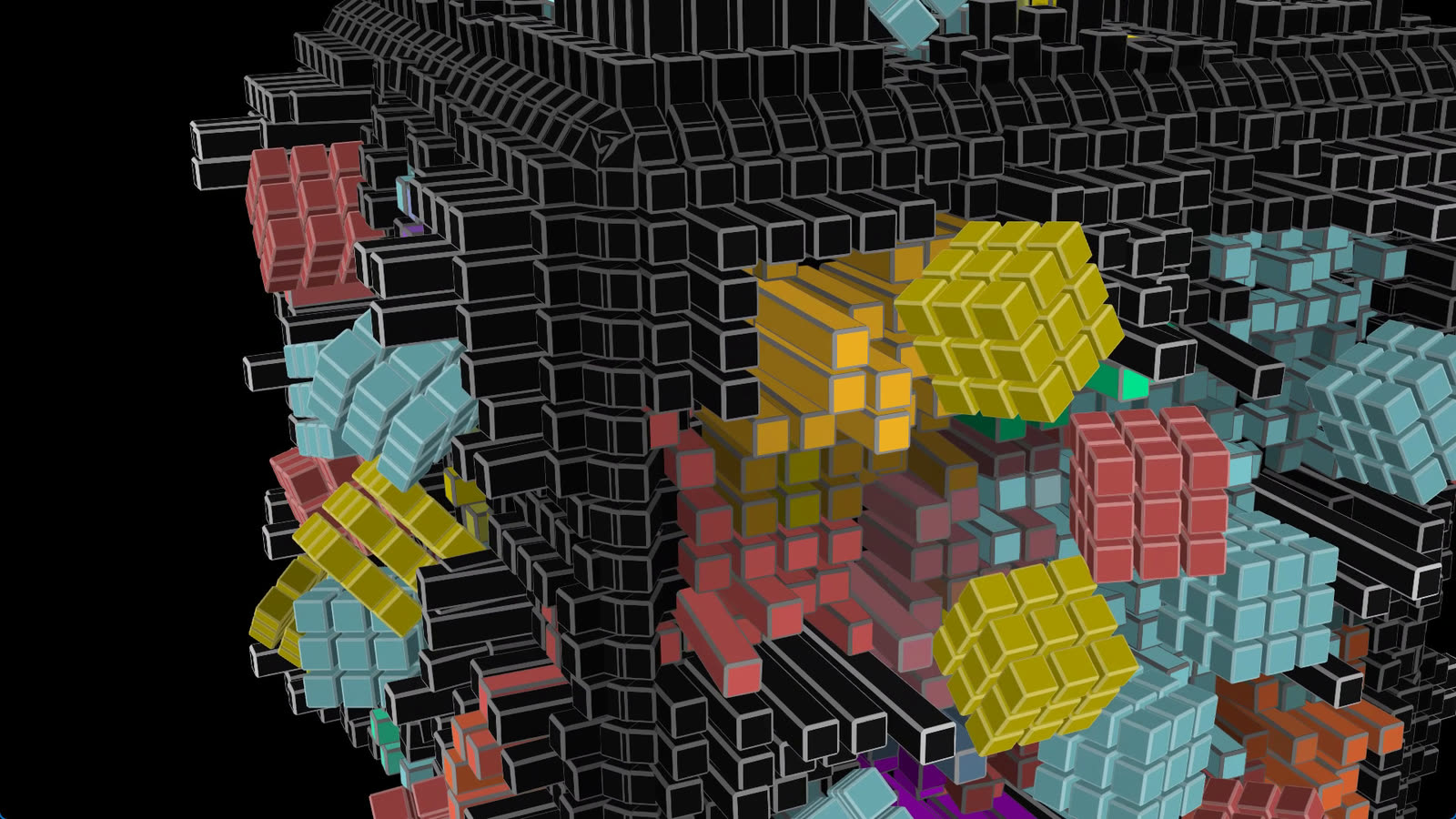
“Raw Cube – Spalten” is the basic form of the Raw Cube series and its reference. This is where the set-up is described that all the other works share.
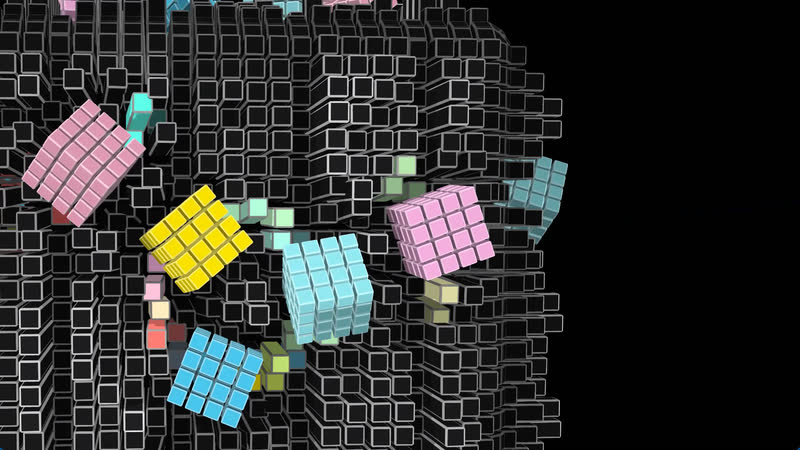
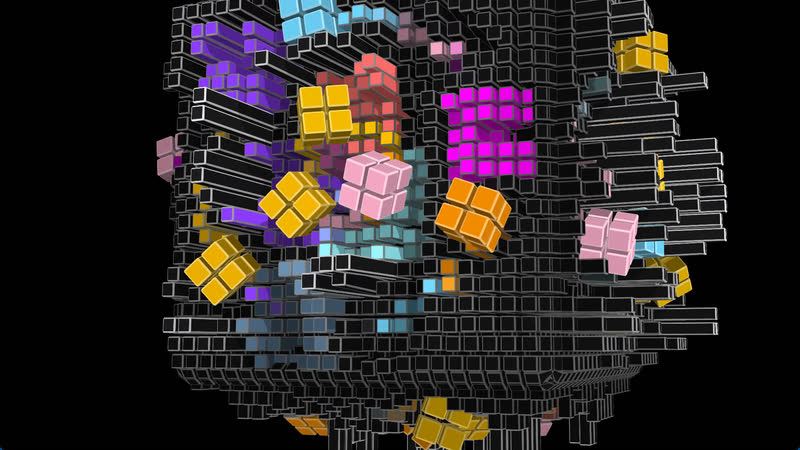
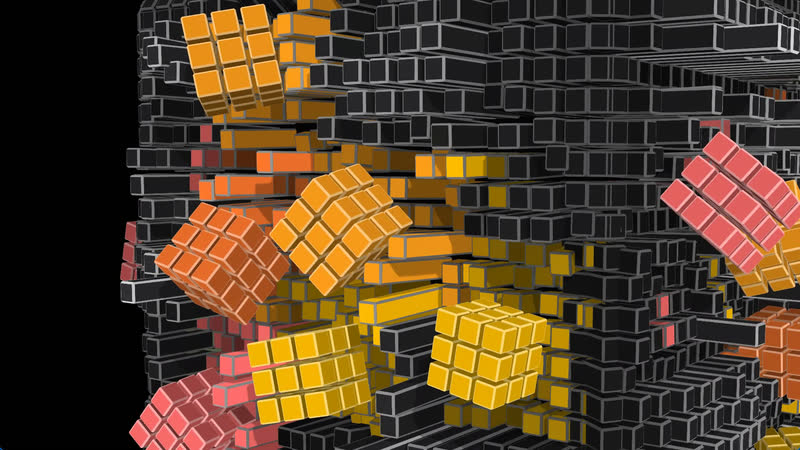
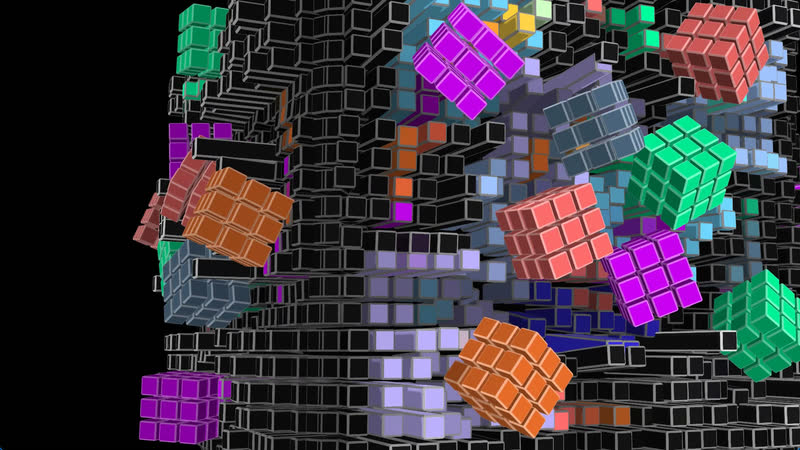
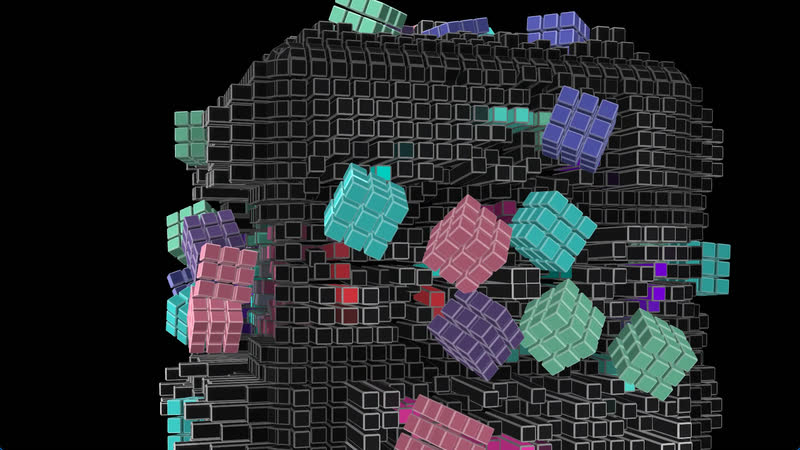
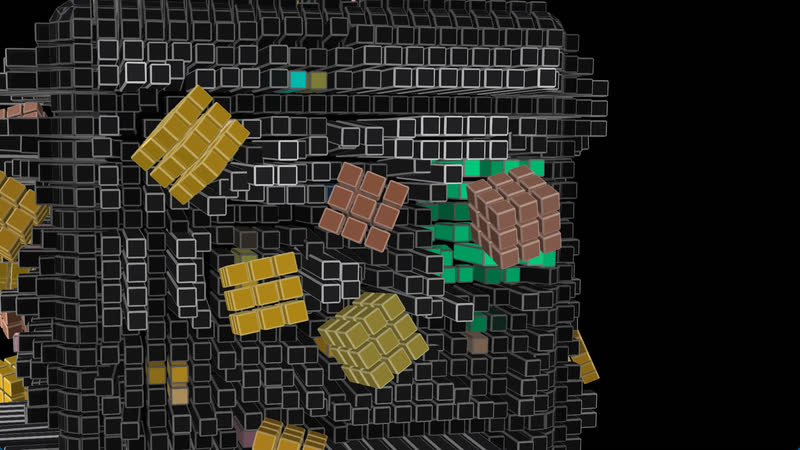
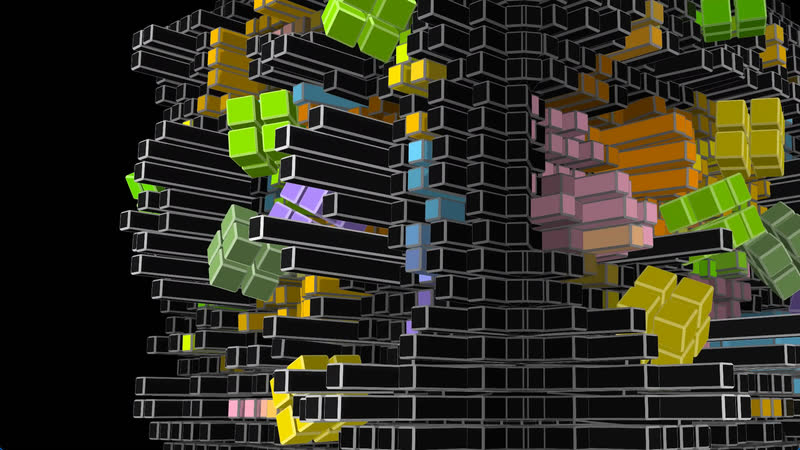
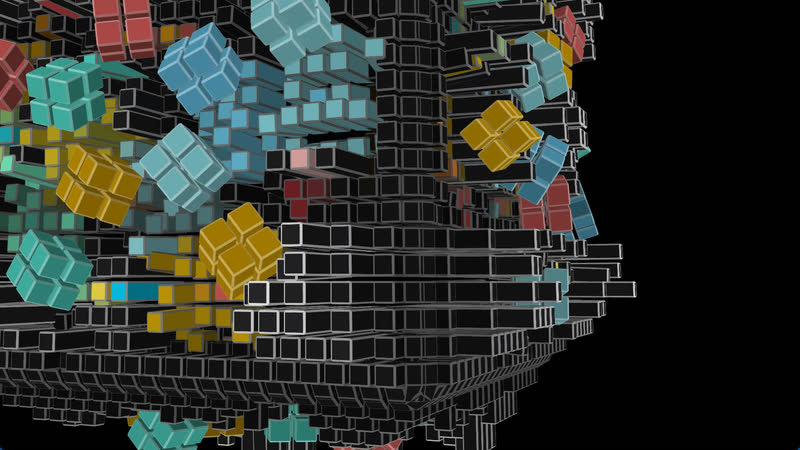
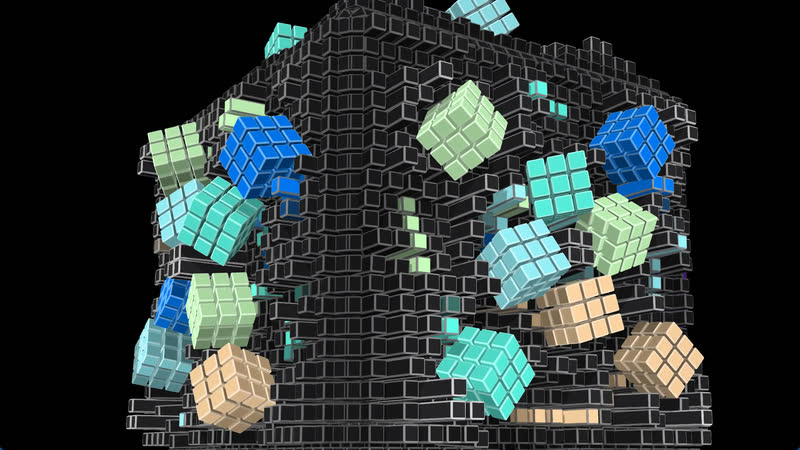
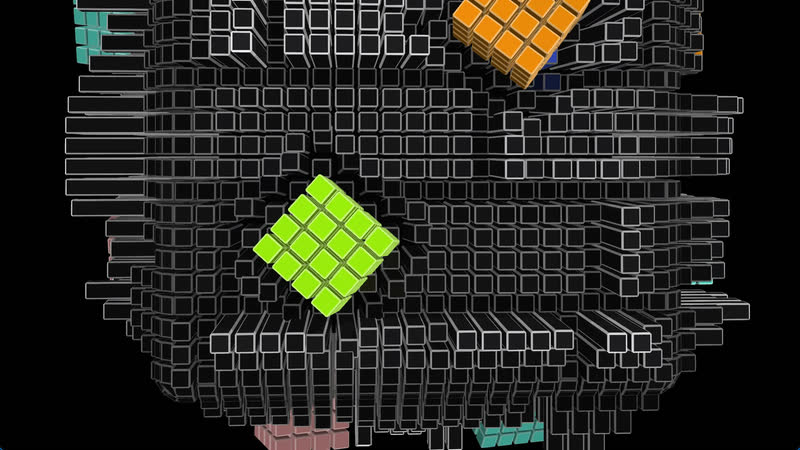
The sphere becomes a cube. Six flat sides, each a square grid of rods, black to dark grey and drawn only by their edges: the higher a rod stands, the brighter its edge – white at the top, dimmed towards the ground. In this way the landscape stands out even when one looks at a side head-on. The figure of the work stands exactly in the centre of each side. At the twelve edges of the large cube the rods become shorter and tilt around the edge, so that its contour remains calm and even.
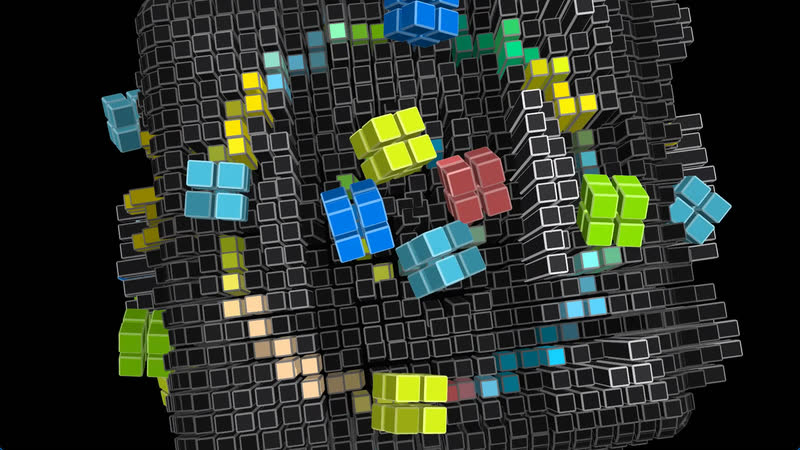
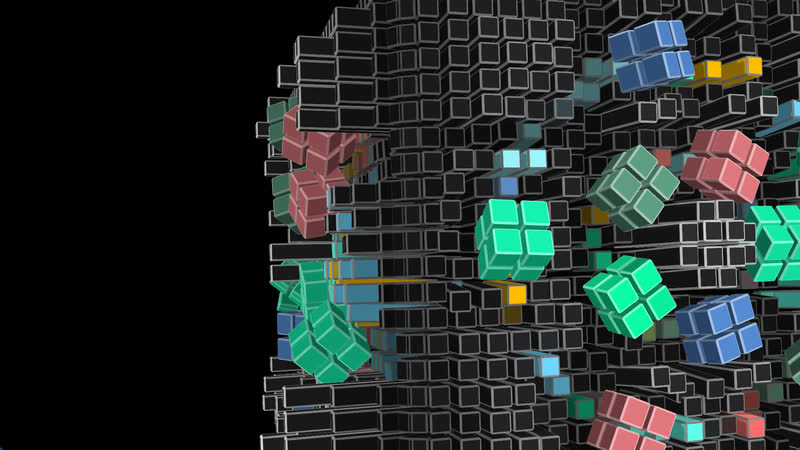
Only the objects – cubes made of cubes – and their trail are coloured. On each side they circle endlessly around its centre and plough a narrow furrow through the rods, which quickly grows closed again behind them and keeps their colour for a while. The cube moves itself: it clicks into place in turns and rocks back, is deflected as if on a rubber band or sways, and the rods feel the acceleration of their floor and spring along. The camera has its own choreography of gliding, standing still and quick sequences of turns. The cube is so large that it often extends beyond the frame; only occasionally does the camera step back into a wide shot. Whoever touches an object punches a square hole around it into the ground.
Raw Cube is the third series after Minimal Quaderspuren and Minimal Sphere: the same twelve works – but here each has its own grid, its own objects, its own gestures of the cube and its own camera beat.
The landscape of this work is built from one figure: column bands, each at its own height. It stands exactly in the centre of each of the six sides.
Grid: 24 rods per cube edge. Objects: cubes of three by three by three, one or two circles per side. Gestures: calm clicking into place in quarter turns. Camera: gliding, standing still and sequences at the basic beat.
Placement in the post-digital model of positing
The basic form of the series: a circle around the centre of each side, round after round, nothing else.
The series works with grid, rhythm and repetition. Deviation comes from the height at which each rod stands in the ground, and from the sequence: cubes circling one behind the other are at different phases of their rotation. Unlike in the two sister series, each work here has its own grid, its own objects and its own beat – the variance also lies between the works.
Square and rod are concrete forms, and the large cube is the most concrete of all. The ground is reduced to the utmost: dark, drawn only by its edges; colour is carried by the objects and their trail alone. Only where the movement ploughs a furrow through the rods does it receive an informal impulse, and the cube adds one of its own when it rocks back and the rods spring along. Two concrete structures whose interaction has an informal consequence – here again lies the field of tension between the concrete and the informal. Between the two poles, stages can be traced here: the fixed grid, the object tracing its circles, the furrow that quickly grows closed again, the colour that stays in it for a while.
Between the non-representational and the representational: the spatial view alone already presents the concrete forms representationally, as bodies in space – here as a cube so large that it often extends beyond the frame. The series is thus in fact a virtual sculpture in motion – a sculptural digital animation.
Videos
1-
Raw CubeKreisUmlauf
Raw Cube – Spalten – Walkthrough
Images
15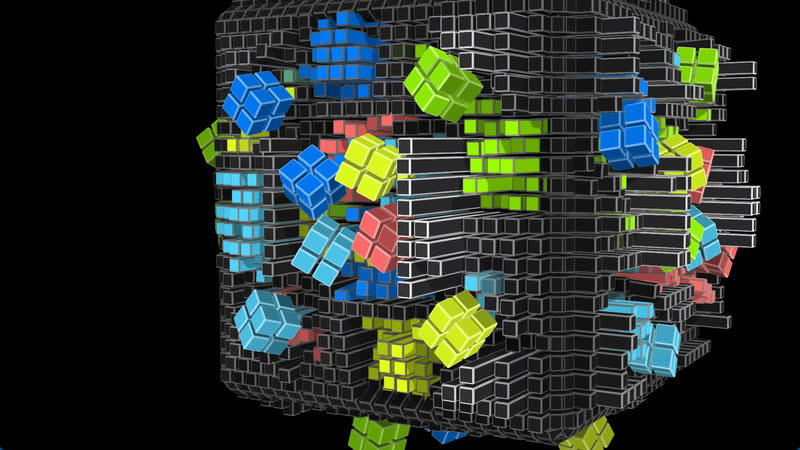
2 more in the archiveNew selection